Loading... Please wait...
Categories
Categories
- Home
- Furniture Today
- Furniture Today Archives
- Furniture/Today's Consumer Buying Trends Overview Report, 2015
Furniture/Today's Consumer Buying Trends Overview Report, 2015

)

Product Description
Originally published in the April 6, 2015 print issue of Furniture Today
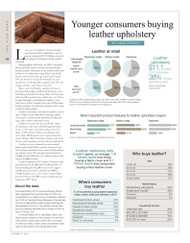
In 2014, 37% of all U.S. households, more than 43 million, bought furniture and bedding products. This year, 41% of all U.S. households, another 47 million, have plans to buy furniture and mattresses. This exclusive data is from Furniture/Today's 2015 Consumer Buying Trends Survey.
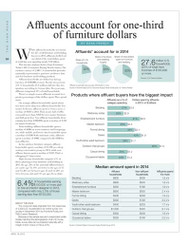
The findings provide nationally-representative purchase incidence figures for 14 furniture products, as well as demographic characteristics of households who bought and plan to buy each category. Bedding was once again the most frequently purchased category. In 2014, 17.4 million households, 15%, bought a mattress and boxsprings, and spent $14.2 billion at retail. While Baby Boomers still account for the largest percentage of the total dollars spent on furniture and bedding, they no longer comprise the greatest share of households buying. A generational analysis of Furniture/Today's latest Consumer Buying Trends data reveals how buying power has shifted since 2012. And, what a difference two years makes. In this exclusive report, Furniture/Today presents the most detailed information available on consumer furniture shopping and buying plans. The consumer data originates from the responses of 2,500 U.S. households to an online survey conducted in December 2014. Furniture/Today worked with TNS Custom Research, one of the world's largest insight, information and consultancy groups. On a product-by-product basis, U.S. households told Furniture/Today what furniture they shopped for last year, what they actually purchased, how much they spent and what types of furniture they plan to buy in 2015. Because of the sample size and a respondent profile closely matching the demographics of all U.S. households, survey data can be projected nationally with a margin of error of plus/minus 2%.
*4 pages*
This material may not be published, broadcast, rewritten or redistributed in whole or part without the express written permission of Progressive Business Media.